
Last Updated on 06/07/2022 by qhbake
How is Probiotic Gummy Production Done in a Factory?

How is probiotic gummy production done in a factory? This article will explore the processes involved in producing probiotic supplements at commercial scale, including prescreening the strains to ensure that they are compatible with active ingredients. It will also discuss secondary packaging options, such as gummy bears and sachets. Ultimately, it will also discuss how to develop a quality control program and a sales and marketing strategy.
Producing probiotics at a commercial scale
The production process for probiotic gummies is not an easy one. The product must be stable and contain the correct amount of live probiotic cells until the expiration date. The stability of the product depends on many factors, including the container and closure system, the design of the matrix, and the water activity of the final formulation. Proper production is crucial to maintain product quality and consistency. Here are some helpful tips for manufacturing probiotic gummies at a commercial scale.
While the quality of the product is the responsibility of the industry, third-party certifications are an excellent way to ensure the integrity of the product. Third-party certifications are recognized by health authorities and consumers as reliable indicators of high-quality probiotic products. Some companies use third-party certification as a way to promote their brands, while others certify for product safety. Generally, third-party certification organizations differ in their scope of assessment, their for-profit status, and the seals they issue to certified products.
Prescreening strains for compatibility with active ingredients
Generally speaking, the prescreening process is similar for food, drink, and dietary supplement products. The first step is to formulate an optimal medium that will support the growth of viable microbes. Depending on the application, this process may include consideration of the absence of allergens, the presence of a host of excipients, and the pH level. Upon completion of this process, the microbes are separated from the growth medium. They are then freeze-dried or cryoprotectants are added to maintain their viability. Once these microbes are freeze-dried, the cells are blended with excipients and other components to make them more stable. Sometimes, additional active ingredients are added to improve the viability, metabolic activity, and gastrointestinal survivability of the strains.
Once a probiotic has been chosen, the next step is to select the appropriate strains. In addition to ensuring a good balance of beneficial bacteria, it should be safe for consumers to ingest the product. Unlike food supplements, probiotics do not have the same shelf life. The fermentation process of a consumer product is essential for the viability of the bacterial cultures and ensures that the resulting product delivers an optimal dose of probiotics.
Secondary packaging options
Among the many secondary packaging options for probiotic gummies manufactured at a factory, heat-sealed plastic bags are among the most popular. These bags are ideal for candy gummies, but can also be used for gummies made from vitamins and supplements. It is important for manufacturers to opt for resealable plastic bags for longer shelf life. Other popular packaging options for gummies include plastic bottles. They are both economical and easy to source. Another popular packaging option is carton packaging, which is made of a tough paper material and is easily filled with the product.
The integrity of probiotic products starts from the strain providers and formulators, and extends to the final packaging. Moreover, ineffective packaging can degrade the formulation, which ultimately impacts its performance. Manufacturers have to address this challenge in order to maintain the integrity of the products. Therefore, they add significant overage to compensate for the loss of potency. This, however, requires more production cost per dose.
Quality control program
A quality control program for probiotic gummies manufactured at a factory should ensure that the ingredients and the resulting products meet strict standards. Probiotic bacteria must be proven to function, and the claim on the label must be met per batch to maintain product quality. In addition, more customers are concerned with cleanliness and cross contamination. A good quality control program for probiotic gummies manufactured in a factory must protect both the consumers and the probiotic bacteria.
The gummies should meet the following requirements: high yield, stability and compliance with allergens. Suitable probiotic strains must be chosen to meet the specifications of each label. Probiotics are live microorganisms that should be manufactured in a clean, sterile and hygienic environment. The probiotic strains must be free from allergens and other impurities. In addition, they should not contain culture media or any other ingredients that could affect their stability.
-
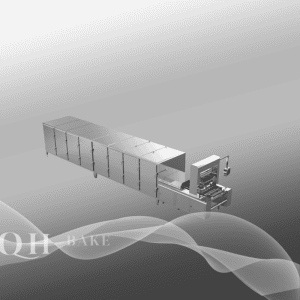
150 Auto starch less gummy candy depositing line: 60,000 gummies/h 280pcs of mold inside machine 8-10PH Cooling unit
-
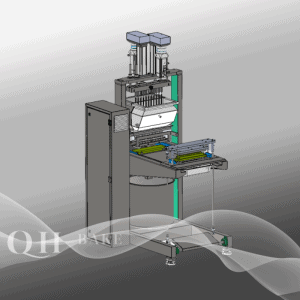
20S Servo-Form candy depositing Equipment: Cavity PCS: ±20; 100x80x160 Size(cm)
-

300 Auto starch less gummy candy depositing line 120,000 gummies/h 8-10PH Cooling unit 280pcs of twin-mold inside machine
-
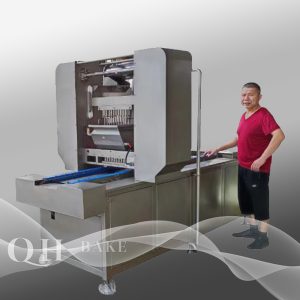
50S Servo Control Candy Depositor: Servo; Cavity PCS: ±20; 200x100x170 Size(cm)
-
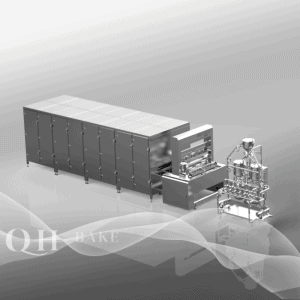
600 Auto starch less gummy candy depositing line: 240,000 gummies/h 10-20 PH Cooling unit 520pcs of twin-mold inside machine
-
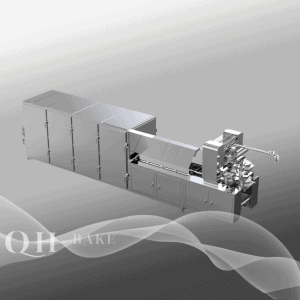
80 Automatic Gummy Candy Production Line: 40,000 gummies/h 5-8PH Cooling unit 200pcs of mold inside machine
-

Automatic cookie production line For Slaes – Cookie Machine
-

Automatic Konjac Pearl Making Machine For Sales – Supplier & Manufacuture
-

Automatic Lollipop Production Line For Sale – Candy Machine Factory
-

Automatic Starch-less Depositing Production Line: Revolutionizing Candy Manufacturing
-

Biscuit Plant Machinery
-
Biscuit Production Line

 English
  Español de México
  Français
  Deutsch
  日本語
日本語  한국어
한국어  Italiano
  Português do Brasil
  Dansk
Dansk  Svenska
  Nederlands
  Русский