
Last Updated on 06/07/2022 by qhbake
Hur tillverkas gummigodis i en fabrik?

This article will give an insight into the different sensory characteristics of gummy candy, its ingredients, manufacturing process, and storage. You’ll learn how these delicious candies are made and how you can make them yourself. Read on to learn more. Listed below are the main components of a jelly godismaskin. To get started, follow these simple instructions. You’ll be able to make gummies in no time!
Various sensory characteristics of gummy candy
A confectionery manufacturer relies on sensory testing to ensure that the finished product is safe for consumers. These tests assess color, texture, taste, odor, and other physical characteristics. The primary ingredients in gummy bears are water, gelatin, sweeteners, and flavors. They are compared to a set standard to ensure that they are of a consistent quality. Depending on the type of candy that the manufacturer is producing, they may also include colors and ingredients.
Manufacturing a gummy candy factory begins with pharmaceutical compounding. Professional workers pour the correct amount of raw materials into a large mixing tank. The mixing process takes about an hour or two. Upon completion, the finished batch is sent to a quality control laboratory. Here, the candy undergoes stringent quality testing. After achieving the desired texture and color, the candy is ready for packaging.
Ingredienser
The process of manufacturing gummy candies starts with the evaluation of incoming raw materials. The QC lab checks for sensory characteristics such as appearance, color, odor, and flavor. These characteristics are also checked for viscosity, pH, and particle size of solids and liquids. These tests are a critical part of the manufacturing process, enabling manufacturers to produce good quality candy. The following steps are necessary to make gummy candies.
Gummy candy is usually made of a mixture of sugar, glucose syrup, water, and gelatin or pectin. Sugar free varieties of the candy may also contain artificial flavorings and colors. Each factory plays with the proportions to create the right texture, consistency, and organoleptic quality. It is also important to know which ingredients are used to make gummy candies. Some types of gummy candies are made with more sugar than others, while others are made with less sugar.
Tillverkningsprocess
A gummy candy manufacturing line requires various equipment, such as sieves, large capacity lines, and hoppers. The machine has a human-machine interface (HMI) for controlling the machine. It can package confectionaries at 250 bags per minute, and uses a striper tube closure to keep gummies intact. Other equipment that is needed for gummy candy manufacturing includes a de-moulding apparatus and oil sprayer.
The first step in the manufacturing process is compounding, whereby workers follow the recipe and pour the appropriate amount of gummy raw materials into large mixing tanks. The mixing process can take between one and three hours. After that, the gummy candy is transported to the Quality Control laboratory to be checked for quality. The finished gummy candy can then be packaged and sold. Gummy candies are made in batches and sold in retail stores, and they are highly desirable among children and adults alike.
Another important step in manufacturing gummy candies is the application of starch. Starch allows gummies to stick to each other, so it is crucial to apply a starch-based coating. Starch-based coatings help make gummy candy more durable, and this ingredient has many health benefits. However, gummy candies are not for everyone, and some may have allergic reactions. As a result, gummy candy manufacturers recommend that you check the ingredients in your candy before buying it.
Förvaring av gummigodis
Gummy candy requires special ingredients for production. Extra-fine granulated sucrose must contain 99.9% sucrose, 0.2% water, and 0.2% invert-sugar. Its bulk density should be 48%-53% lb/cu. ft., granulation should be 90% through 40 mesh, and color should be water white. The sugar is supplied in syrup form. Shipping and storage costs are concerns. Sucrose syrup must be used within 60 days and stored at temperatures between 70degF and 100degF. Storage tanks must contain filtration and be protected by UV lamps.
Regardless of where they are stored, gummy candy must be kept in a cool, dark place to preserve their freshness and flavor. To extend the shelf-life of the candy, it is recommended to refrigerate the product if it is stored in hot climates. Gummy candy should be dried first before packaging in airtight containers. Drying the candy should occur at least eight hours prior to packaging.
-
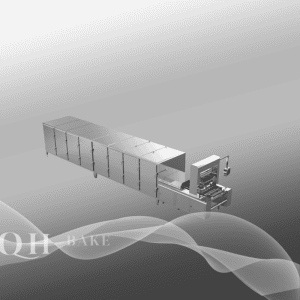
150 automatiska stärkelsefria gummigodisdeponeringslinjer: 60 000 gummies/h 280 st formar inuti maskinen 8-10PH kylenhet
-
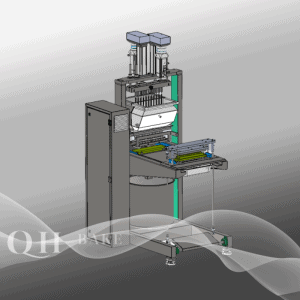
20S Servo-Form godisdeponeringsutrustning: Hålrum PCS: ±20; 100x80x160 Storlek (cm)
-
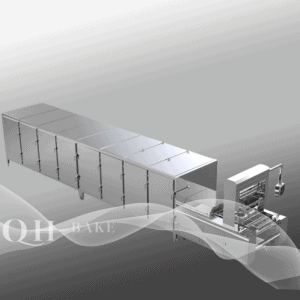
300 automatiska stärkelsefria gummigodisdeponeringslinjer 120 000 gummies/h 8-10PH kylenhet 280 st dubbelformsmaskin inuti
-
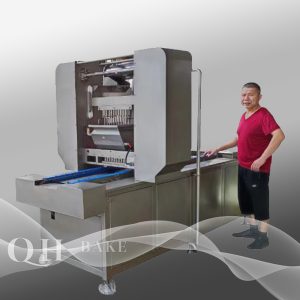
50S Servostyrd Godisdeponerare: Servo; Hålrum Antal st: ±20; 200x100x170 Storlek (cm)
-
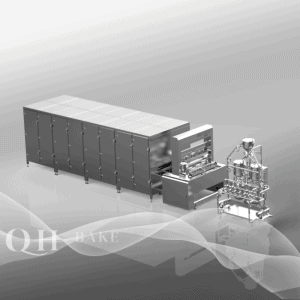
600 automatiska stärkelsefria gummigodisdeponeringslinjer: 240 000 gummies/h 10-20 PH Kylenhet 520 st dubbelformsmaskin inuti
-
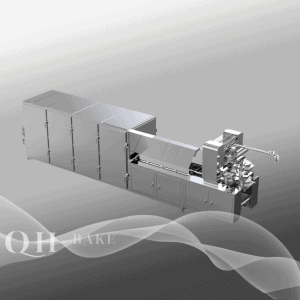
80 automatiska gummigodisproduktionslinjer: 40 000 gummigodisar/h 5-8PH kylenhet 200 st formar inuti maskinen
-

Automatisk kakproduktionslinje For Slaes – Cookie Machine
-

Automatisk Konjac Pearl Making Machine för försäljning – Leverantör & Tillverkning
-

Automatisk Lollipop produktionslinje till salu – Candy Machine Factory
-

Automatisk stärkelsefri produktionslinje: Revolutionerar godistillverkningen
-

Biscuit Plant Machinery
-
Kex produktionslinje

 Svenska
  English
  Español de México
  Français
  Deutsch
  日本語
日本語  한국어
한국어  Italiano
  Português do Brasil
  Dansk
Dansk  Nederlands
  Русский