

Dernière mise à jour le 27/05/2024 par QHBAKE
In the bustling corridors of modern health and nutrition, probiotic gummies stand as ambassadors of wellness, offering a delightful convergence of taste and health benefits. These gummies are not just a snack; they’re a step towards a balanced gut flora and a vibrant lifestyle.
At QHBake, we’re dedicated to equipping manufacturers with the best machinery to produce these beneficial treats. Join us as we explore the captivating process of how probiotic gummies are made in a factory.
The Probiotic Gummy Making Process
Stage 1: Formulating the Recipe
The journey begins with the formulation of a recipe that includes a blend of probiotic strains, sweeteners, gelling agents, and natural flavors. The selection of ingredients is meticulous, ensuring that the gummies are not only potent but also delectable.
Stage 2: Preparing the Mixture
In the factory’s mixing department, ingredients are combined in large-scale mixers. These machines ensure that the mixture is homogenous, allowing for an even distribution of probiotics and other components.
Stage 3: Cooking the Blend
The mixed blend moves to cooking kettles, where it is heated to a specific temperature. This process activates the gelling agents and ensures the probiotics are stable, a critical step given the heat sensitivity of live cultures.
Stage 4: Depositing into Molds
The cooked mixture is then transported to depositors, which carefully fill molds with precise amounts of the gummy blend. These molds are designed with various shapes and sizes, adding a visual appeal to the gummies.
Étape 5 : Refroidissement et prise
Post-molding, the gummies are sent through cooling tunnels where they gradually cool and set. This step is crucial for achieving the characteristic chewy texture of gummies.
Stage 6: Drying
After cooling, the gummies enter a drying phase to remove any residual moisture, which is essential for maintaining the integrity and shelf life of the probiotics.
Stage 7: Coating (Optional)
Some probiotic gummies receive an optional sugar-free coating, adding an extra layer of flavor and protection. Enrobing machines apply this coating uniformly.
Stage 8: Cutting and Trimming
Once the gummies are set, they are cut and trimmed to ensure uniformity and remove any excess material.
Stage 9: Packaging
The final product is then packaged using automated packaging lines. This step protects the gummies and prepares them for distribution to consumers worldwide.
Machinery and Production Line Overview
- Récipients de mélange:Pour mélanger les ingrédients de manière uniforme.
- bouilloires de cuisine: To heat the mixture and activate gelling agents.
- Depositors and Pumps: For filling molds with precision.
- Cooling Tunnels: To set the gummies’ texture.
- Drying Systems: To remove excess moisture.
- Coating Equipment: For applying a protective and flavorful coating.
- Cutting Machines: To trim the gummies to size.
- Packaging Lines: For wrapping and boxing the final product.
Materials Needed
- Probiotic Cultures: Vital for digestive health benefits.
- Gelling Agents: Such as gelatin or pectin for texture.
- Édulcorants: Natural alternatives like xylitol or stevia.
- Flavors and Colorings: To enhance taste and appearance.
- Stabilizers: To maintain product quality.
Conclusion
The creation of probiotic gummies is a blend of art and science, where each stage is as crucial as the ingredients themselves. At QHBake, we pride ourselves on providing the machinerie that makes this process not only possible but also efficient and reliable. Our commitment to innovation ensures that your probiotic gummies will be at the forefront of health and taste.

Appel à l'action
Ready to embark on the journey of producing probiotic gummies? Gâteau QHBake is your partner in crafting gummies that are as healthy as they are tasty. Contact us today to learn more about our machinery and how we can support your production needs.
-
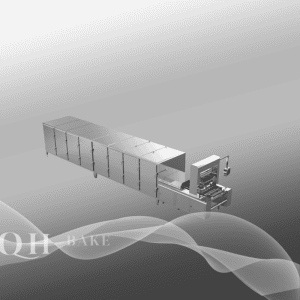
Ligne de dépôt automatique de bonbons gélifiés sans amidon 150 : 60 000 bonbons gélifiés/h 280 pièces de moule à l'intérieur de la machine Unité de refroidissement 8-10PH
-
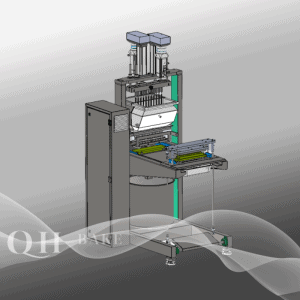
Équipement de dépôt de bonbons Servo-Form 20S : Cavité PCS : ±20 ; 100x80x160 Taille (cm)
-
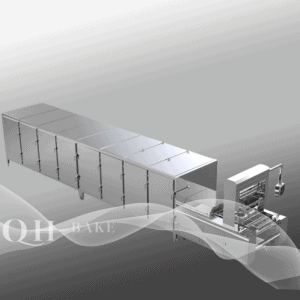
Ligne de dépôt automatique de bonbons gélifiés sans amidon 300 120 000 bonbons gélifiés/h 8-10PH Unité de refroidissement 280 pièces de double moule à l'intérieur de la machine
-
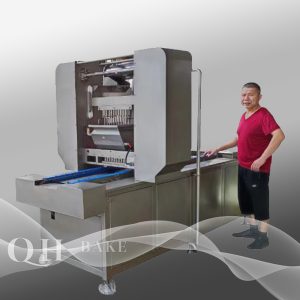
Distributeur de bonbons à servocommande 50S : servocommande ; nombre de cavités : ± 20 ; dimensions : 200 x 100 x 170 cm
-
Ligne de dépôt automatique de bonbons gélifiés sans amidon 150 : 60 000 bonbons gélifiés/h 280 pièces de moule à l'intérieur de la machine Unité de refroidissement 8-10PH
-
Équipement de dépôt de bonbons Servo-Form 20S : Cavité PCS : ±20 ; 100x80x160 Taille (cm)
-
Ligne de dépôt automatique de bonbons gélifiés sans amidon 300 120 000 bonbons gélifiés/h 8-10PH Unité de refroidissement 280 pièces de double moule à l'intérieur de la machine
-
Distributeur de bonbons à servocommande 50S : servocommande ; nombre de cavités : ± 20 ; dimensions : 200 x 100 x 170 cm
-
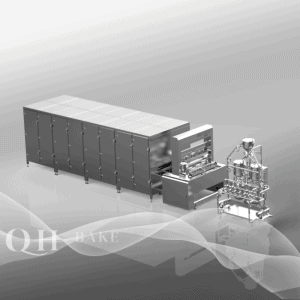
Ligne de dépôt automatique de bonbons gélifiés sans amidon 600 : 240 000 bonbons gélifiés/h 10-20 PH Unité de refroidissement 520 pièces de double moule à l'intérieur de la machine
-
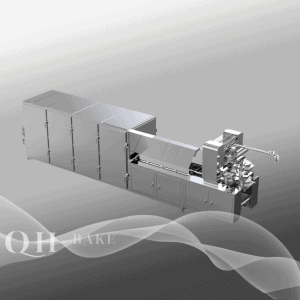
Ligne de production automatique de bonbons gélifiés : 40 000 bonbons gélifiés/h, unité de refroidissement 5-8 PH, 200 pièces de moule à l'intérieur de la machine
-

Ligne de production automatique de biscuits pour Slaes - Cookie Machine
-

Machine automatique de fabrication de perles de Konjac pour les ventes - Fournisseur et fabrication
-

Ligne de production automatique de sucettes à vendre - Candy Machine Factory
-

Ligne de production automatique de dépôt sans amidon : révolutionner la fabrication de bonbons
-

Biscuit Plant Machinery
-
Ligne de production de biscuits

 Français
  English
  Español de México
  Deutsch
  日本語
日本語  한국어
한국어  Italiano
  Português do Brasil
  Dansk
Dansk  Svenska
  Nederlands
  Русский