

Dernière mise à jour le 10/06/2024 par QHBAKE
Greetings, confectionery enthusiasts and sweet-toothed dreamers! Imagine, if you will, a world where gummy bears rule not just the candy aisle but also our hearts and minds. Now, how do we get from a modest kitchen escapade to a full-blown gummy empire?
It all starts with the right machinery. Today, we’re going to chew over the differences between commercial gummy making machines and their home-use counterparts. Let’s not sugarcoat it—this is a journey you’ll want to be a part of.

The Scale of Production
Let’s dive right into the most apparent difference: the scale of production. Home-use gummy making machines are like a cozy, little gummy workshop. They’re perfect for small batches, crafting just enough gummies for your family, friends, or perhaps a modest online store. On the other hand, commercial machines are like a gummy factory, churning out gummies by the thousands, meeting the demands of large-scale operations and nationwide distribution.
Power and Performance
Now, let’s talk about power under the hood. Commercial gummy making machines are built for heavy lifting. They operate with high-speed mixers, robust heating systems, and advanced depositors that can handle the rigors of mass production. In contrast, home-use models are more delicate, with smaller motors and less intense heating elements, designed for lighter use and easier maintenance.

Machine pour la fabrication de gommes
Complexity and Customization
When it comes to customization, commercial machines offer a level of complexity that’s hard to match in the home kitchen. With commercial machines, you can produce a wide variety of shapes, sizes, and even incorporate intricate details into your gummies. Home-use models, while versatile, are generally limited to simpler shapes and smaller production runs.
Regulatory Compliance
In the commercial candy kitchen, it’s not just about making gummies; it’s about making gummies that comply with food safety regulations. Commercial gummy making machines are designed to meet stringent health and safety standards, ensuring that your gummies are not only tasty but also safe for consumption. Home-use machines, while they should also adhere to safety guidelines, are not typically held to the same level of scrutiny.
Cost and Investment
Ah, the bottom line—where dreams are made (or sugar-coated). Commercial gummy making machines are a significant investment, reflecting their robust construction, high production capacity, and advanced features. Home-use models, on the other hand, are a more accessible entry point for the aspiring gummy entrepreneur or the passionate home cook looking to add a chewy twist to their culinary repertoire.

Statistical Data and Market Trends
According to a report by MarketsandMarkets, the global gummy confectionery market is projected to grow at a CAGR of 4.8% from 2020 to 2025. This growth is driven by increasing demand for gummy vitamins and functional gummies, indicating a market ripe for both small-scale artisans and large-scale manufacturers.
Ease of Use and Learning Curve
Home-use gummy making machines are designed with the novice in mind, offering simplicity and ease of use. They come with user-friendly features and often include instructions that are as clear as a sugar cookie recipe. Commercial machines, however, come with a steeper learning curve, requiring training and expertise to operate at peak efficiency.

Conclusion
Whether you’re a home cook with a gummy bear-shaped dream or a seasoned candy maker looking to expand your empire, understanding the differences between commercial and home-use gummy making machines is crucial. It’s about matching your machinery to your vision, your production needs, and your budget. So, the next time you’re faced with the choice, consider the scale, power, customization options, regulatory requirements, cost, and ease of use. And remember, whether you’re making gummies for a crowd or just for yourself, the most important ingredient is the love and care you put into every batch.
-
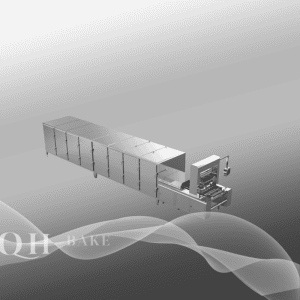
Ligne de dépôt automatique de bonbons gélifiés sans amidon 150 : 60 000 bonbons gélifiés/h 280 pièces de moule à l'intérieur de la machine Unité de refroidissement 8-10PH
-
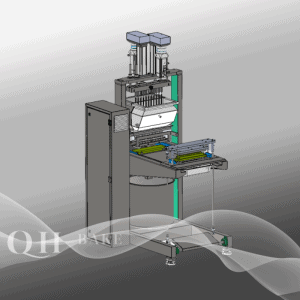
Équipement de dépôt de bonbons Servo-Form 20S : Cavité PCS : ±20 ; 100x80x160 Taille (cm)
-
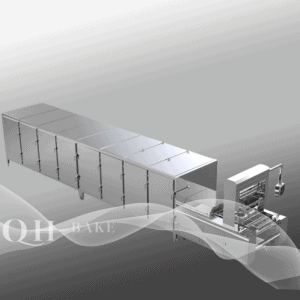
Ligne de dépôt automatique de bonbons gélifiés sans amidon 300 120 000 bonbons gélifiés/h 8-10PH Unité de refroidissement 280 pièces de double moule à l'intérieur de la machine
-
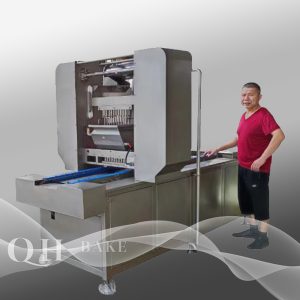
Distributeur de bonbons à servocommande 50S : servocommande ; nombre de cavités : ± 20 ; dimensions : 200 x 100 x 170 cm
Appel à l'action
Ready to take your gummy making to the next level? Keep an eye out for our future articles where we’ll explore the ins and outs of gummy production, from flavoring secrets to packaging tips. And as you embark on your gummy journey, remember that every great gummy starts with the right machine.
-
Ligne de dépôt automatique de bonbons gélifiés sans amidon 150 : 60 000 bonbons gélifiés/h 280 pièces de moule à l'intérieur de la machine Unité de refroidissement 8-10PH
-
Équipement de dépôt de bonbons Servo-Form 20S : Cavité PCS : ±20 ; 100x80x160 Taille (cm)
-
Ligne de dépôt automatique de bonbons gélifiés sans amidon 300 120 000 bonbons gélifiés/h 8-10PH Unité de refroidissement 280 pièces de double moule à l'intérieur de la machine
-
Distributeur de bonbons à servocommande 50S : servocommande ; nombre de cavités : ± 20 ; dimensions : 200 x 100 x 170 cm
-
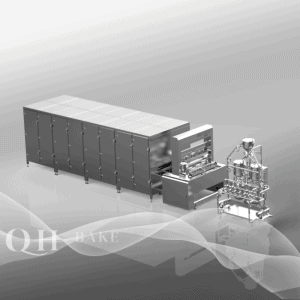
Ligne de dépôt automatique de bonbons gélifiés sans amidon 600 : 240 000 bonbons gélifiés/h 10-20 PH Unité de refroidissement 520 pièces de double moule à l'intérieur de la machine
-
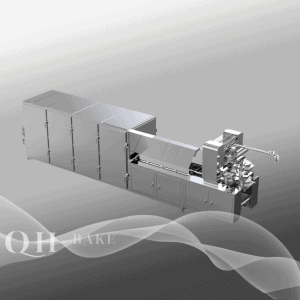
Ligne de production automatique de bonbons gélifiés : 40 000 bonbons gélifiés/h, unité de refroidissement 5-8 PH, 200 pièces de moule à l'intérieur de la machine
-

Ligne de production automatique de biscuits pour Slaes - Cookie Machine
-

Machine automatique de fabrication de perles de Konjac pour les ventes - Fournisseur et fabrication
-

Ligne de production automatique de sucettes à vendre - Candy Machine Factory
-

Ligne de production automatique de dépôt sans amidon : révolutionner la fabrication de bonbons
-

Biscuit Plant Machinery
-
Ligne de production de biscuits

 Français
  English
  Español de México
  Deutsch
  日本語
日本語  한국어
한국어  Italiano
  Português do Brasil
  Dansk
Dansk  Svenska
  Nederlands
  Русский