
Zuletzt aktualisiert am 06/03/2024 von QHBAKE
Jelly, a beloved confection with a delightfully wobbly texture and a burst of fruity flavor, has been a staple treat for generations. Whether it’s spread on toast for breakfast or enjoyed as a sweet snack, the appeal of jelly is undeniable.
But how does this jiggly treat go from concept to jar? In this article, we’ll take you behind the scenes of a factory to explore the fascinating process of jelly manufacturing.
The Ingredients of Jelly
Before we dive into the process, let’s look at the key ingredients that give jelly its unique characteristics:
- Fruit Puree or Juice: Provides flavor and natural color.
- Zucker: Adds sweetness and acts as a preservative.
- Pektin: A natural gelling agent derived from fruit that gives jelly its structure.
- Zitronensäure: Hilft beim Gelieren und verbessert den Geschmack.
- Wasser: The liquid base for the jelly mixture.

bunter hintergrund von geleebonbons
The Jelly Manufacturing Process
Stage 1: Preparation of Ingredients
The process begins with the preparation of ingredients. Fruit puree or juice is obtained by mashing or juicing fruits. Sugar and pectin are measured out according to the recipe, and citric acid is prepared for addition.
Stage 2: Mixing and Cooking
In large industrial mixers and cookers, the ingredients are combined and heated to a specific temperature. This step is critical as it activates the pectin and ensures the jelly sets correctly.
Stage 3: Gelling
Once the mixture reaches the right temperature, it’s allowed to cool slightly, which starts the gelling process. The transformation from liquid to gel is a result of the pectin’s reaction with the sugar and acid.
Stage 4: Filling and Sealing
While still in a semi-liquid state, the jelly is carefully filled into jars. High-speed filling machines ensure that each jar is filled accurately and efficiently. The jars are then sealed to preserve the freshness of the jelly.
Schritt 5: Abkühlen und Aushärten
The filled jars are moved to a cooling area where they are allowed to cool down completely. This is when the jelly fully sets and achieves its final, firm texture.
Stage 6: Quality Control
Before the jars leave the factory, they undergo a series of quality checks. This includes inspecting the jars for any defects, ensuring the correct fill level, and checking the seal for integrity.
Stage 7: Labeling and Packaging
The final product is labeled with nutritional information, ingredients, and any relevant health claims. The jars are then packaged into boxes or shrink wrap for distribution.

Verwendete Maschinen und Geräte
- Mixing Vessels: For combining ingredients uniformly.
- Cooking Kettles: To heat the mixture to the correct temperature.
- Filling Machines: For accurately filling jars with the jelly mixture.
- Sealing Equipment: To close and seal the jars.
- Cooling Chambers: To allow the jelly to cool and set.
- Quality Control Machines: For inspecting and ensuring product quality.
- Labeling and Packaging Machines: To prepare the product for market.
Abschluss
The manufacturing of jelly is a symphony of ingredients, heat, and time, all coming together to create a product that is both simple and sensational. From the careful selection of fruits to the precise cooking and cooling processes, every step is crucial in crafting a jar of jelly that will bring joy to consumers.
Aufruf zum Handeln
Ready to witness the mesmerizing journey of jelly from a factory? Visit our factory and see how we turn fresh ingredients into your favorite spreads. For manufacturers looking to enhance their jelly production line, QHBake offers a range of machinery and expertise to elevate your product to the next level.
-
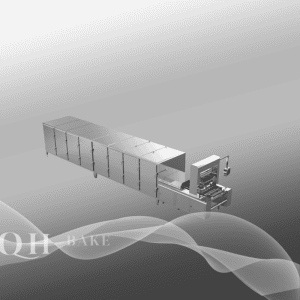
150 Automatische Ablagelinie für stärkefreie Gummibonbons: 60.000 Gummibärchen/h, 280 Formen in der Maschine, 8-10PH-Kühleinheit
-
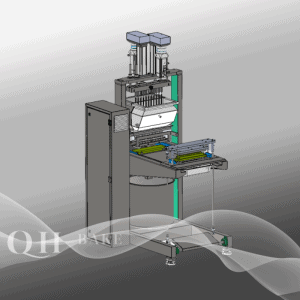
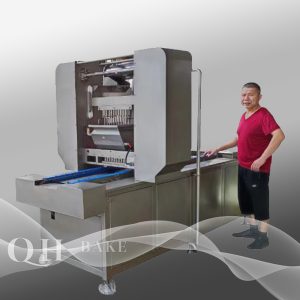
20S Servo-Form Bonbonablagegerät: Hohlraum-PCS: ±20; 100x80x160 Größe (cm)
-
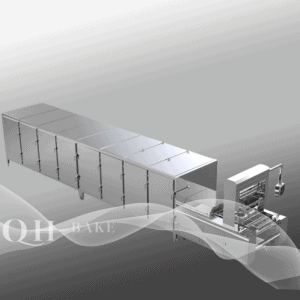
300 Automatische Ablagelinie für stärkefreie Gummibonbons, 120.000 Gummibärchen/h, 8–10 PH, Kühleinheit, 280 Stück Doppelformen in der Maschine
-
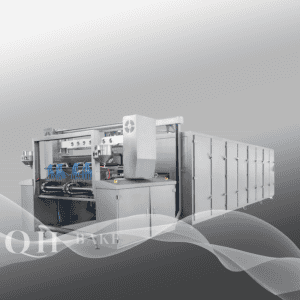
50S-Süßigkeitenablage mit Servosteuerung: Servo; Hohlraum-PCS: ±20; Größe 200 x 100 x 170 (cm)
-
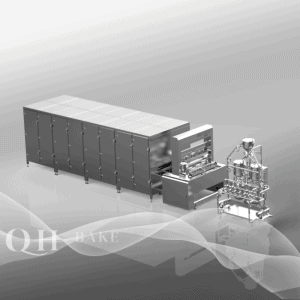
600 Automatische Ablagelinie für stärkefreie Gummibonbons: 240.000 Gummibärchen/h, 10–20 PH-Kühleinheit, 520 Stück Doppelformen in der Maschine
-
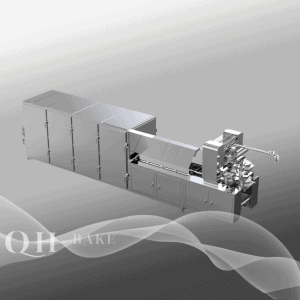
80 Automatische Produktionslinie für Gummibonbons: 40.000 Gummibärchen/h, 5-8PH-Kühleinheit, 200 Stück Formen in der Maschine
-

Automatische Keksproduktionslinie für Slaes – Cookie Machine
-

Automatische Konjac-Perlenherstellungsmaschine für den Verkauf - Lieferant und Hersteller
-

Automatische Lollipop-Produktionslinie zum Verkauf – Candy Machine Factory
-

Automatische Produktionslinie für stärkefreies Gießen: Revolution in der Süßwarenherstellung
-

Biscuit Plant Machinery
-
Biskuit-Produktionslinie

 Deutsch
  English
  Español de México
  Français
  日本語
日本語  한국어
한국어  Italiano
  Português do Brasil
  Dansk
Dansk  Svenska
  Nederlands
  Русский